
Why millions of people sleep 8 hours and still wake up tired
It is not how long you sleep. It is the quality of the dark you sleep in.
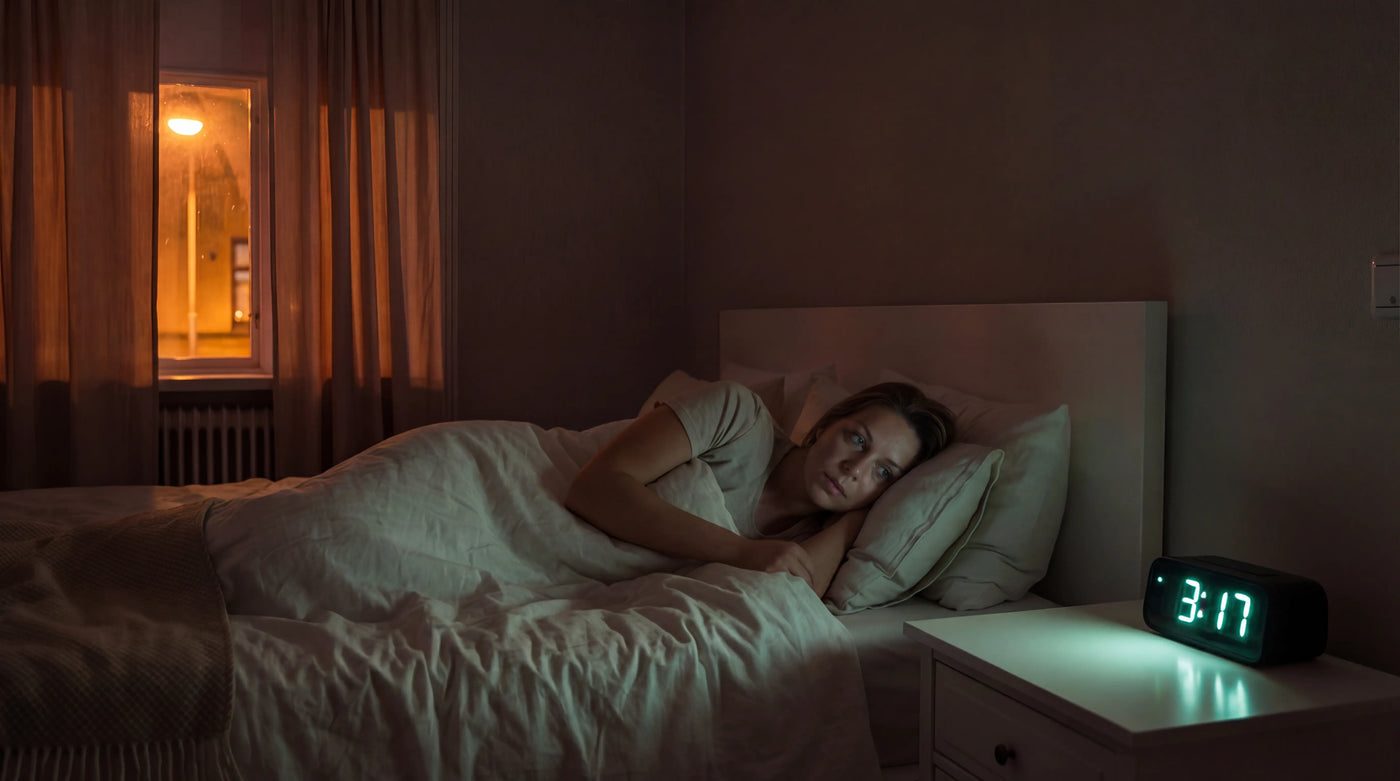
Streetlight, alarm display - your bedroom is never fully dark.
Your brain never stops watching for light
That groggy feeling when your alarm goes off — the heaviness, the fog, the sense that sleep didn't count — isn't because you didn't sleep enough. It's because your brain never fully committed to deep sleep.
The reason is light. Not daylight. Not a lamp left on. The light you've stopped noticing.
Phone standby glow. Street light filtered through curtains. The hallway slipping under your door. An alarm clock face. A charging indicator the size of a grain of rice.
You stopped seeing these. Your brain didn't. Every point of light signals your body to stay alert — even through closed eyelids.
Your body was designed for 0.1 lux
A hundred years ago, bedrooms were nearly pitch black. You blew out a lamp and the only light left was the moon — about 0.1 lux on a clear night. That's the darkness your circadian system evolved over thousands of years to sleep in.
It hasn't had time to adapt. The LED alarm clocks, charger indicators, standby lights, and streetlights bleeding through curtains — all of it is new. Your biology is old. The gap between the 0.1 lux your body expects and the 15–30 lux it actually gets is where your sleep quality disappears.
Your bedroom tonight, measured
Here's what a typical bedroom looks like at midnight, with every light turned off and curtains closed:
At 24 lux, your body is producing roughly a third of the melatonin it should be. You'll still fall asleep — eventually. But you'll spend less time in deep sleep, more time in light stages, and wake up feeling like the night didn't quite land.
This happens every night. It's invisible, cumulative, and it compounds.
"Light exposure at night suppresses melatonin production and disrupts circadian rhythm, leading to reduced sleep quality and impaired daytime function."
— Published in Sleep Medicine Reviews
You've probably tried a sleep mask. It probably didn't work.
Most people who try a sleep mask give up within a week. Not because masks don't work — because most masks are badly designed.
Flat silk masks look elegant but they sit directly on your eyelids, absorb your skincare, and leak light at the nose and temples. You wake up with creases and residual glow.
Foam contoured masks from Amazon block more light, but they're bulky. They trap heat. The single elastic strap rides up or digs in. By 3am you've pulled it off without realizing.
Adjustable cup masks solve the light problem but create a new one — the cups shift during side sleeping and press into your eyes. Some users report waking up with blurred vision from corneal pressure.
The category isn't broken. The approach is.
The contoured shell wraps to your face where flat masks gap. Independent cavities lift away from your eyelids entirely — no contact, no pressure, no marks. Breathable fiber memory foam stays cool instead of trapping heat against your face.
It's not a better version of what exists. It's a different architecture.
The alternative to fixing the dark
If your body isn't producing enough melatonin because of light exposure, you have two options.
You can take synthetic melatonin — a supplement that overrides your body's natural production. It works, sometimes. But the dosing is guesswork, the timing is tricky, and the side effects are well documented: groggy mornings, vivid nightmares, and a dependency loop where your body produces even less melatonin on its own over time.
Or you can fix the environment.
Remove the light, and your body handles the rest. Melatonin production ramps up on its own. You fall asleep faster because your biology is doing what it evolved to do — not because a pill is forcing it.
- Overrides natural production
- Dosing varies by person
- Groggy mornings, vivid dreams
- Dependency builds over time
- $15–30/month, ongoing
- Restores natural melatonin
- No dosing, no timing
- No side effects
- Works every night, indefinitely
- One-time investment
No pills. No dependency. No guessing. Just darkness — the way your body was designed to sleep.
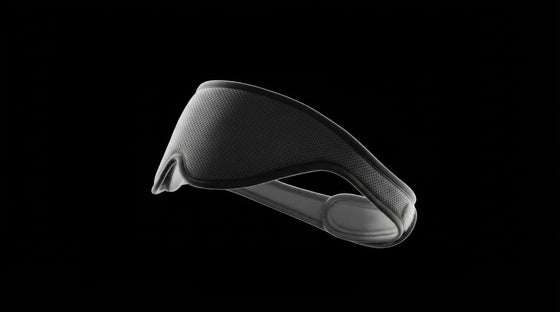
Hypnord NATT™
Total blackout. Zero compromise.
$59.00
Sleep with NATT™ for 60 nights. If you don't wake more rested, send it back. No questions. No fees.
Try NATT™ Risk-FreeFree US shipping Ships in 2–3 days 60-night trial